
articles

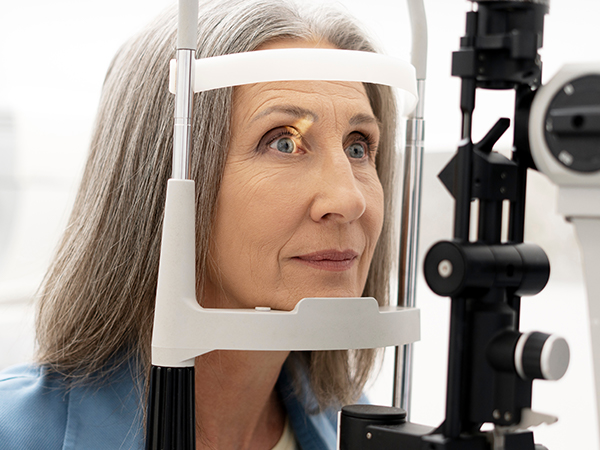
Routine eye exams are an important aspect of maintaining one's overall health. As with an annual physical or dental exam, it is extremely important to have your eyes examined regularly. Regardless of how great your eyesight is, scheduling regular eye exams is a great way to stay on top of your overall health.
Adults should have an eye exam every 1-2 years, depending on any existing vision problems, eye conditions or being diagnosed with significant risk factors, such as diabetes, high blood pressure, thyroid disease, previous eye injuries or family history. The doctor will recommend a frequency for routine follow-up exams based on the patient’s medical history. For instance, a diabetic patient will need a dilated eye exam every year while contact lens wearers need exams every year in order to look for changes that might affect lens fit and eye health.
Regular eye exams will also ensure that prescriptions for glasses or contact lenses are current as well as offer an opportunity to check for early signs of certain diseases. Adults older than 60 should have an eye exam each year, as age-related eye problems are more common.
It may be important to see a doctor more frequently if one is experiencing any of the following:
Blurry vision or loss of vision.
Difficulty seeing things near and/or far away and perform basic tasks.
Flashing light in the eye.
Eye floaters, or small spots that appear in vision.

Both optometrists and ophthalmologists treat many common types of ocular disease. However, for the best outcome, it’s important to see an eye doctor regularly. They can identify any issues before they become serious problems.
Fortunately, they can treat all of the diseases mentioned below, and in some cases, you can do certain things to prevent them from developing. Look at the most recent statistics, and you’ll see why good eye health care matters.
Currently, more than 4.2 million people in the U.S. alone over the age of 40 are partially blind or have poor visual acuity. Although a lot of things cause these problems, the ocular diseases listed below are the most common.
Macular Degeneration
This is commonly referred to as “age-related macular degeneration” because it affects seniors. Not only does it cause blurriness and distortion but left untreated, individuals lose their central vision. In other words, they are unable to see anything through the center portion of the eye.
Two types of this ocular disease exist. First, wet macular degeneration means that abnormal blood vessels that are located behind the retina grow under the macular. Along with leaking blood and fluid, this leads to scarring and, sometimes, permanent damage. Second, dry macular degeneration progresses slowly as part of the natural aging process. Typically, it affects both eyes at some point.
Cataracts
Roughly 20 million people in the U.S. over the age of 40 have cataracts in either one or both eyes. While they can develop in children, teens, and young adults, cataracts are most often associated with age. With this, a film covers the eye, which, in turn, makes everything appear blurry.
Of all the different kinds of ocular diseases that lead to blindness worldwide, cataracts rank number two. Fortunately, an eye doctor can remove the damaged lens, followed by implanting an artificial one. After recovery, patients see amazingly well.

We all want to enjoy healthy eyes and clear vision for as long as we possibly can. Fortunately, there are things that we can do to help make this possible. It’s easy to think that protecting our eyes from obvious harm, such as the harsh effects of UV light or potential injury during an activity like welding or woodworking, is enough. However, there are many other things that we can do to keep our eyes functioning well for as long as possible. This includes taking supplements to help ensure that we get the right nutrition for our eyes to be healthy.
EyePromise offers a range of highly effective and expert-recommended nutritional supplements that are designed to support optimal eye health.

Understanding Keratoconus
Keratoconus is an eye disease that causes the cornea to thin and bulge. This bulge generally takes on the appearance of a cone. As light enters the eye, it becomes distorted by the cone causing vision abnormalities.
Modern research is connecting keratoconus with an enzyme imbalance in the cornea. This imbalance leaves the eye susceptible to oxidative free radicals. Keratoconus has also been linked to UV damage, excessive eye rubbing, poorly fitting contacts, and chronic eye irritation.
Treatment Options
While your eye professional will have the best understanding of what treatment option is right for you, we have compiled ten of the most common treatments here.
Corneal Cross-linking (CXL) – There are two different types of this procedure, but they both introduce riboflavin to the cornea in order to strengthen the corneal tissue and stop the bulging from progressing.
Custom Soft Contact Lenses – Soft contacts are generally more comfortable to wear than gas permeable lenses. Recently, some contact companies have been able to create a contact specifically to correct the issues related to mild and moderate cases of keratoconus.
Gas Permeable Contact Lenses – Gas permeable lenses are a hard contact lens that physically forces the eye to adhere to the lens shape. This allows for the correction of keratoconus. The fit is often time-consuming and may take several different lenses to achieve the proper fit.
Piggybacking Contact Lenses – This method is used for individuals who require a gas permeable lens but cannot tolerate wearing rigid contacts. Piggybacking utilizes a soft lens placed on the eye first, and then a gas permeable lens is placed over the top. This offers the comfort of soft contacts with the rigidity and clarity of the gas permeable lenses.
Hybrid Contact Lenses – Hybrid contact lenses were designed specifically for keratoconus. This technology blends a rigid contact lens center with a softer edge, or skirt, of the contact
Scleral and Semi-Scleral lenses – These lenses are gas permeable lenses but cover a larger area of the eye than a standard rigid lens. These lenses don’t put pressure onto the cone shape of the eye. The reduced pressure results in a more comfortable fit for patients.

It is common knowledge that exercise plays a critical role in healthy living. Exercise can help improve energy levels, lower blood pressure, aid in weight loss, helps to build muscle and so much more. But one benefit of exercise that is not as well known is the profound impact on your eyesight.
Based on recent research, eye conditions are usually a direct result of a health issue such as high blood pressure, diabetes, high cholesterol level, etc. While some of these diseases are unavoidable, exercising regularly can definitely help in the prevention of these diseases and in doing so, help keep the eyes healthy. In addition to physical exercise, there are even some eye exercises that can be done to keep your vision healthy. Some examples are focusing on certain points, rolling your eyes in different directions, writing with the eyes, etc.
Cataracts and Exercise
According to a study in 2003 and another in 2006, a relationship was discovered between an increase in exercise and a decrease in cataract. It emphasized that there is a greater chance for cataract if there is an absence of physical activity. This implies that taking a light walk or jog around your house or on a field track consistently can contribute to the fight against cataracts.
Macular Degeneration and Exercise
According to one study, exercising three times or more on a weekly basis reduces ones’ chances of developing exudative macular degeneration. Exudative macular degeneration occurs when blood vessels grow beneath the retina that are not needed and then leak fluid and blood into the eyes.
Glaucoma and Exercise
One major cause in the development of glaucoma is an increase in ocular perfusion pressure. Very light exercises like jogging or walking at least three times weekly helps to reduce the intraocular pressure and improves the flow of blood to the optic nerve and retina.
The benefit of eye exercises
Protects against dry eyes. Eye exercises help maintain and improve the fluid level in the eyes, thus eliminating the probability of dry eyes because as the eyes are being exercised say by rotation, there is the tendency that fluid is produced.
Reduces eye strain and tension. Exercising the eyes daily helps in reducing the strain and tension that has been placed on the muscle. Exercises like rolling the eyes and writing with the eyes help in the contracting and relaxing of the eye muscles. Long hours of study or use of a computer can cause blurry vision, but through exercise, clarity can be achieved by eliminating tension and unnecessary pressure.
Make the eye muscles flexible. Exercises like shifting and swinging the muscles of the eyes help promote flexibility in the muscles of the eyes. Just like exercise helps the body muscles, the same thing applies to eye exercises.

When it’s time to select a new pair of eyeglasses, it can be challenging to find the frame that feels the best for you. Eyeglass makers have become increasingly aware of their clients’ desire to customize frames as well as offer a variety of colors, designs, and frame shapes. Understanding more about your face shape and the types of frames that would look best on you can help to reduce the amount of time you spend trying on frames that don’t complement your face shape. Here are a few useful tips to help you find glasses best suited for your face shape.
Face Types
While there are thousands of different frame shapes, there are only seven different face shapes.
Round
This face type is as wide is it is long. There are no specific or well-defined angles to this face type. Most people with this facial type look for frames that will elongate their face in order to draw out their natural features as well as give their face a thinner appearance. A good choice is often to select a frame that is angular and narrow.
Heart
If you can imagine the shape of a traditional heart, this face shape is easy to identify. The top 1/3 of the face is wider while the rest of the face tapers to a narrow chin. Individuals with this face shape will often seek frames that are wider at the bottom of the lens. This helps to balance the face and give the appearance of a narrower face at the top. Another great fit for this face type would be rimless frames.
Base Down Triangle
This face type contains a wide jaw and cheekbones but is narrow at the forehead. Cat-eye type frames are great for this face type, as are frames that are heavier near the eyebrow to provide more balance.
Diamond
This face type is the rarest. The diamond face is like the base-down triangle but differs because it has a narrow chin, thus appearing like a diamond. When selecting eyeglasses, look for oval-shaped frames, or frames that have more detail along the brow line.
Oblong
This face type looks like an oval, but these individuals have a straight cheek line. This face is fuller than it is long. Frame types that add some depth are ideal for this face. This can be done by finding frames that have decorative pieces along the temples or that have more depth with a reduced width.
Oval
Oval faces are the most common face type. They are considered to have balanced proportions so that most frame types will work well. An oval face is longer than it is wide and includes plump cheekbones. Walnut shaped eyeglasses are an ideal choice, but frames that are as wide or wider than the broadest part of your face would work as well.
Square
These individuals have a broad forehead and jaw that gives the appearance of the face having equal and straight sides. These face types usually do well with narrow or oval-shaped frames which will help to soften their features.

At Cutlerville Eyecare, we are proud to offer pediatric eye examinations. Children should have their first eye exam around the age of twelve months. At this examination, the doctor can rule out an eye turn, unequal prescriptions between the eyes, congenital cataracts and even rare ocular conditions like tumors. It is then recommended by the American Optometric Association that a child is seen between the ages of three and five. Once a child is in school, the doctors at Cutlerville Eyecare recommend they are seen annually.
How are doctors able to evaluate a child’s vision?
The doctor will use a special light called a retinoscope. By observing the movement of the light that is reflected off the retina, your optometrist can determine whether the child is nearsighted or farsighted without getting subjective input. The doctor wants to ensure the prescriptions are equal between the eyes to rule out a concern for amblyopia. Amblyopia is a condition where one eye is weaker than the other. When this unequal prescription is not corrected for, the brain will favor the ‘stronger’ eye and cause the other eye to become ‘lazy’. If not corrected with glasses or contact lenses, this can cause permanent vision impairment for some.

Sports vision is a growing niche in the eyecare industry, helping athletes improve their performance skills through the enhancement of visual skills. While regular eye exams are important for checking the health of your eyes and your visual acuity (how clearly you can see a still object at different distances), sports vision testing is recommended for anyone who takes their athletic performance seriously.
Visual skills needed for sports performance
There are several key visual skills that are enhanced through sports vision programs for athletes that aim to achieve their optimal sports performance, these include:
Dynamic visual acuity: this refers to the patient’s ability to see objects clearly while in motion. This is exceptionally important as hand-eye coordination and reflex reactions are essential for success in most sporting activities.
Contrast sensitivity: good contrast sensitivity is needed to determine the difference between an object and its surroundings. Contrast sensitivity is particularly important in situations where there may be low light, fog or glare that could diminish the natural contrast between objects and backgrounds.
Eye tracking: this refers to the ability to follow a fast-moving object, such as a ball or puck.
Switching eye focus: athletes need to be able to change their focus quickly and accurately from one distance to another.
Binocular vision skills: also known as eye teaming skills, these skills determine how well your eyes work with one another to produce a single, clear image.
Processing speed: visual processing speed is defined as the amount of time it takes to make a correct judgement about a visual stimulus – for example, how fast a ball is travelling towards them.
Peripheral awareness: athletes also need to be able to be aware of what is happening at the edges of their vision while also concentrating on a fixed object in front of them.
Sports vision testing can enable your eye doctor to spot any weaknesses that you may have in any of these key visual skills. By identifying them, it is possible for you to undergo treatment to overcome theses issues and meet your specific goals that will ultimately enhance your overall athletic performance. This is known as sports vision training.

Just a few decades ago, computer vision syndrome (CVS) was not known or understood. However, with an increase in the role of computers in our lives, it has become an increasingly common issue. Researchers believe that 50-90% of people who use computers in their daily lives have experienced CVS to some degree. The amount of time that many people stare into a computer screen is increasing, which puts significant strain on our eyes.
CVS is not considered a single specific problem, but a suite of issues. And with the increased use of school computers, tablets and smartphones, children are also becoming more susceptible to CVS.
This syndrome is similar to many other repetitive motion type conditions such as carpal tunnel syndrome. Problems can start because as we are reading text on a screen, our eyes move in a repetitive motion throughout the day. Once the issue has started, continuing the same behavior can worsen any symptoms. While reading alone uses the same motion, digital screens add flicker, contrast, glare, and light that all put additional strain on our eyes.
Issues may also be accelerated if you should be wearing some type of corrective lens, but don't, and are therefore putting additional strain on your eyes.
Aging can also speed up the progress of these issues. Around the time that people turn 40, the lens of the eye becomes less flexible due to a condition called presbyopia, which affects their ability to see closer objects.
What Happens if I have CVS?
There is currently no proof that CVS causes long-term vision impairment or blindness. Continuing to use a computer or any other type of screen can continue to be an annoyance or reduce your ability to see properly. Some of the warning signs of CVS are:
Blurred vision
Double vision
Red or dry eyes
Headaches
Neck pain
Back pain
Eye Irritation
If you don’t properly treat CVS when these symptoms occur, you may begin to notice that you suffer from a decrease in overall quality of life or job performance.

Many people don’t realize that eyelashes are both functional and attractive. The purpose of eyelashes is to act as a first line of defense for our eyes, preventing airborne dirt, dust and other debris from reaching the delicate tissues of our eyes. You probably don’t know that when your eyes are closed, your eyelashes form a nearly impenetrable barrier against foreign irritants entering the eyes.
Unfortunately, we aren’t all blessed with naturally thick, luscious lashes. In fact, many people choose to get artificial eyelashes or eyelash extensions to make them appear longer or thicker than they really are. Unfortunately, the challenge of achieving voluminous eyelashes is even greater if you suffer from a condition called hypotrichosis.

Our Services
Contact Info
Hours of Operation
- Monday 8:45am – 7:00pm
- Tuesday 8:45am – 5:00pm
- Wednesday 8:45am – 7:00pm
- Thursday 8:45am – 5:00pm
- Friday 8:00am- 3:00pm
- Saturday Closed
- Sunday Closed
© 2026 Cutlerville Eyecare. All rights Reserved. Accessibility Statement - Privacy Policy - Sitemap
Powered by:
